- Home
- Our Process
Our Process
PerPETual Global's unique IP and Proven Technology
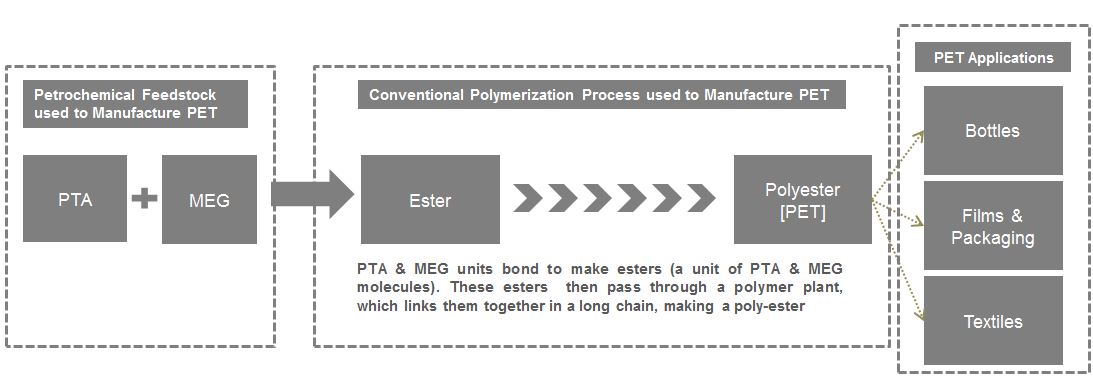
Conventional polyethylene terephthalate (PET) is made by reacting an acid, purified terephthalic acid (PTA), with a glycol, monoethylene glycol (MEG). When PTA and MEG are reacted together, they produce an ester (the building blocks required to make PET) ; this is the first step of the PET production process. The esters are then linked together through a polymerization process, which creates a polyester (PET). The PET is then processed into downstream applications such as polyester filament yarns, bottles, films and packaging, as well as polyester staple fibre.
PET Manufacturing Process
Renew Process
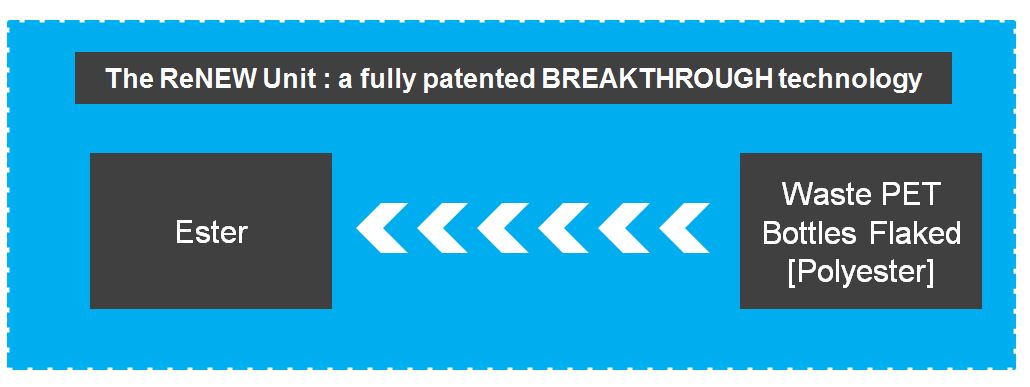
PerPETual Global’s unique breakthrough technology is able to reverse the polymerization process whilst retaining the full integrity of the plastic and its building blocks. Any type of post-consumer PET bottles (a polyester) are flaked and fed into the ReNEW Process, and depolymerised back into an ester. The ester solution contains contamination from the bottles such as dyes and pigments from coloured bottles, dust, non-PET material, and glues. It is passed through a proprietary filtration process which removes these impurities and the output is a clear, high and consistent quality ester solution which is functionally equivalent to virgin esters. These sustainable esters can be used to feed conventional PET plants to (re)manufacture sustainable PET.
Quick facts
- over 600 billion bottles are discarded globally every year.
- only 47% of these bottles are collected.
- the majority are taken by mechanical recyclers
Find out more